
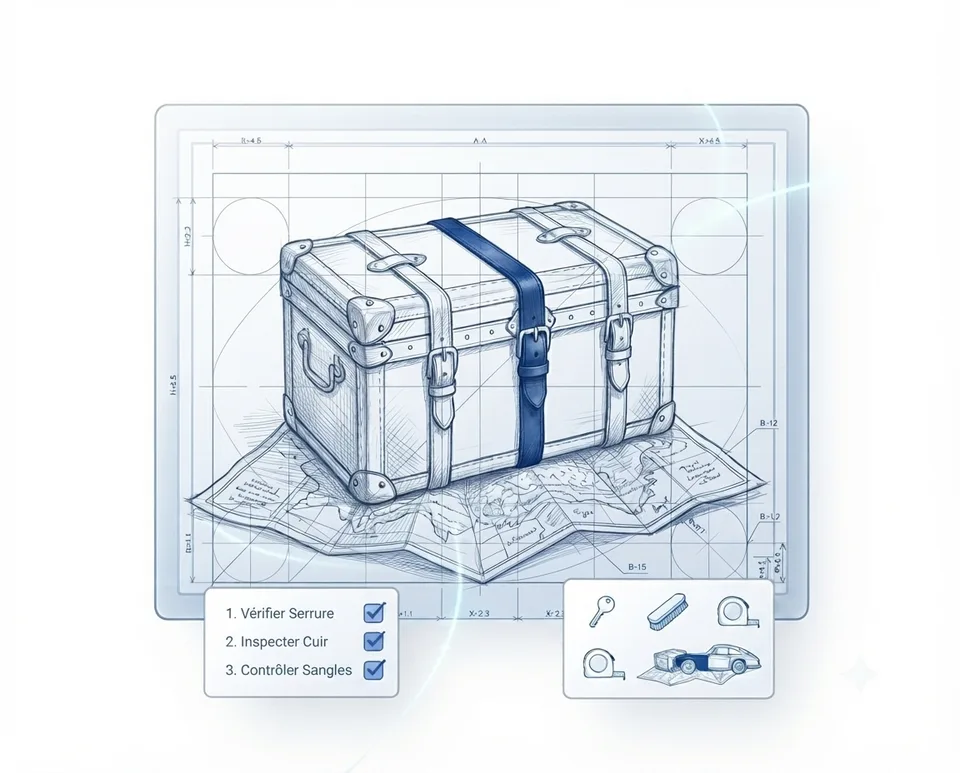
Five tools that don't talk to each other
The itinerary is on a map, bookings in the mailbox, the budget in a spreadsheet, the packing list on a scrap of paper, and decisions in a chat group. Every question, “where do we sleep on the third night?”, “how much is left in the kitty?”, “who booked the car?”, means digging everywhere.
In a group, files diverge, and nobody's sure they're looking at the latest version the night before departure.
Your trip, described then generated
Describe your setup: “Five of us for a week. We have stops with dates and accommodation, bookings (train, car, activities) with a status and an amount, a shared budget with who fronted what, and a packing checklist. I want to see the day-by-day plan, the kitty balance and what isn't booked yet.”
Blueprint Maker generates the matching application: stops and their plan, bookings and their status, the shared budget, the checklist, and a dashboard answering your questions.
Your stops, your expense categories, your way of splitting costs become the structure of the application.
- Itinerary: dated stops with accommodation
- Bookings: status, amount, who's handling it
- Shared budget: who fronted what
- Packing checklist
- Day-by-day plan, shared
Shared with the group, on a single URL
The application is a web application at its dedicated address. The whole group accesses the same up-to-date data, from phone or computer: the plan, the budget, the bookings. No more contradictory spreadsheet versions at the airport.
Nothing to install: everyone opens the link, adds a booking or ticks off an item, the others see it.
For the length of a trip, and it stays yours
The Discovery plan (€0) generates a first complete application, often enough for a trip. Paid plans are for iterating, with the cost shown before each generation.
The code is exportable: keep the application as a memento, reuse its structure for the next trip, or archive it. It doesn't depend on a subscription to survive.
Typical generated entities
- Stop
- Booking
- Expense
- Traveller
- Packing item
Generated screens
- Day-by-day itinerary
- Bookings with status and amount
- Shared budget: who fronted what
- Packing checklist
- Trip dashboard
Dashboard indicators
- Bookings confirmed / pending
- Budget spent vs kitty
- Balance between travellers
- Items packed before departure
Frequently asked questions: trip planning
Do I need technical skills to create this app?
No. You describe your trip in plain language: stops, bookings, budget: validate a plan, and the application is generated without writing code.
Can several people use it?
Yes: it's a centralised web application. The whole group accesses the same up-to-date data on a shared URL, from the phone.
Does it handle splitting costs between travellers?
Yes if your description provides for it: each expense carries an amount and who fronted it, with a view of the balance between travellers to settle up at the end.
And after the trip, what happens to the app?
It stays yours: the code is exportable, you can archive it or reuse its structure for the next trip.
Is it really free to start?
Yes: the Discovery plan generates a first application without paying. The cost of further generations is shown before launching them.