
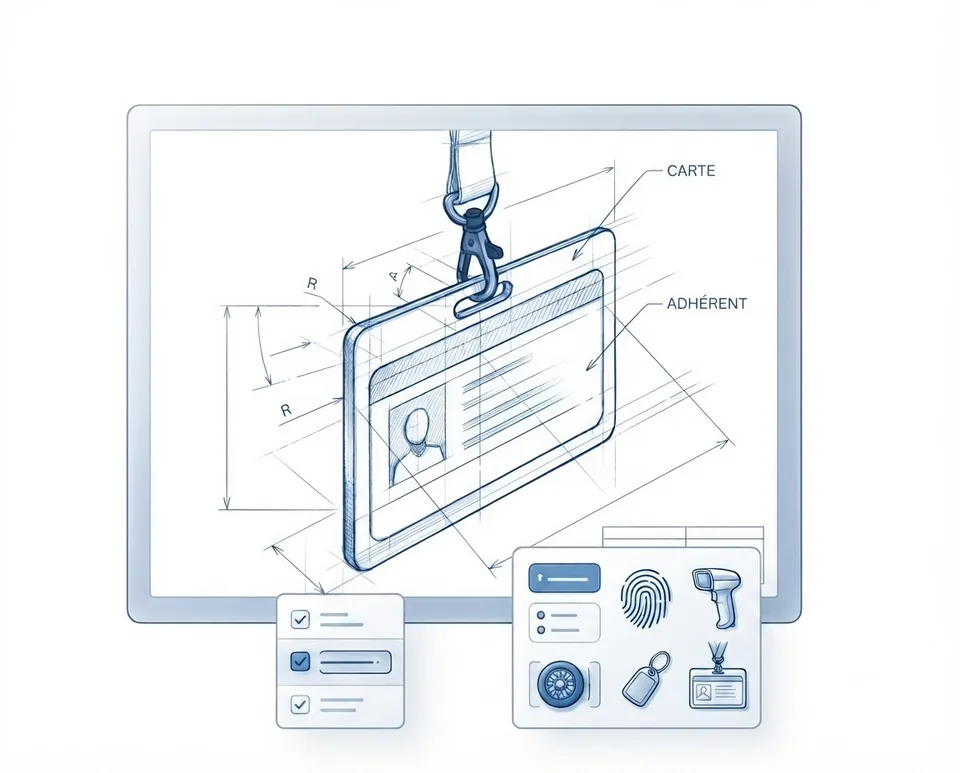
This template applies the four-block method: THE THINGS, THE LINKS, THE STATES, THE NUMBERS, to running an association. It's filled in for a theatre-workshop association: the example shows how to describe members, dues and registrations without getting lost in edge cases.
To adapt it, start from your realities: your membership categories, your rhythm (September-to-June season, calendar year), your activities and their constraints (capacity, facilitator, time slot). Describe the normal operation that covers a typical season; exceptions can be added later, on a sound structure.
Filled with your own words, this text briefs a developer or a technical volunteer: or is submitted as-is to Blueprint Maker, which turns it into an application plan you validate, then a generated application: database, records and lists, dashboard and demo data. A tool the next committee will find intact.
The template to copy
My organisation: cultural association running theatre workshops,
about 180 members, a season from September to June.

THINGS tracked:
- Members (name, e-mail, phone, join date, category individual, family or reduced)
- Membership fees (season, amount, payment date, payment method)
- Workshops (name, day and time, facilitator, maximum capacity)
- Registrations (date, season)

LINKS:
- A membership fee is paid by a member for a season.
- A registration attaches a member to a workshop.
- A workshop is run by a facilitator.

STATES of a membership fee: expected, paid, exempt, late.

NUMBERS to see every morning:
- Members up to date on dues and members late
- Fees collected this season
- Fill rate per workshop
- New memberships this month
Adapting this template to your organisation
- Sports club: replace workshops with time slots or teams, and if needed add the federation licence as a member field (number, validity date): it's a field, not an entity.
- Volunteers: if your association runs on volunteer shifts (refreshments, supervision, events), add a "Shift" entity (date, people needed) with a link "a member signs up for a shift".
- Calendar year: replace "season" with "year" throughout: the structure doesn't change, only the word does.
- Differentiated rates: the example categories (individual, family, reduced) are examples; use yours, with the matching amount on the fee.
- Stay on operational tracking: association accounting and tax receipts have their own dedicated tools: this tool tracks who is up to date, not the ledger.