
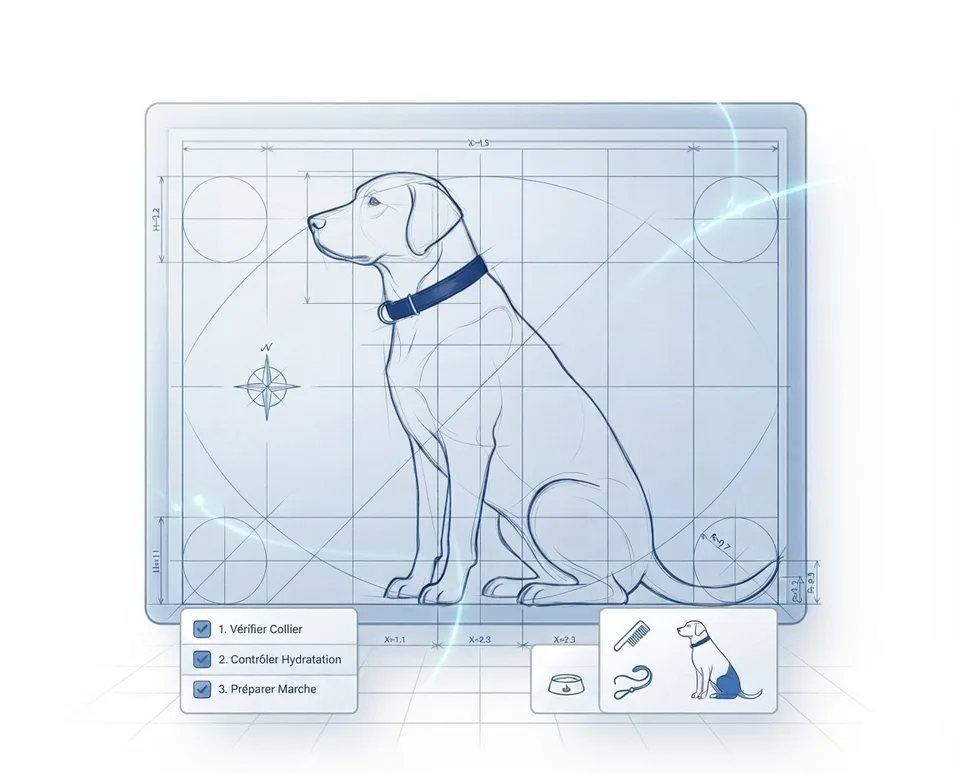
This template applies the four-block method — THE THINGS, THE LINKS, THE STATES, THE NUMBERS — to an independent pet boarding facility. It's filled in for a dog and cat boarding facility: the example shows how to describe animals, owners, stays and kennels, without ever describing a screen.
The trade carries two things of a different nature: the animal's record (care instructions, treatments, vaccinations — what doesn't change from one stay to the next) and the stay itself (dates, a kennel, a one-off booking). The template separates them: the animal record carries what lasts, the stay carries what repeats — and each stay attaches to it.
Filled with your vocabulary, this text briefs a developer — or is submitted as-is to Blueprint Maker, which turns it into an application plan you validate, then a generated application: database, screens, dashboard and demo data.
The template to copy
My business: independent dog and cat boarding facility,
twelve dog kennels and eight cattery spots.

THINGS tracked:
- Animals (name, species, owner, care instructions, vet,
  vaccination dates)
- Owners (name, contact details)
- Stays (animal, kennel, arrival date, departure date, status)
- Kennels (number, type — dog / cat, capacity)

LINKS:
- An animal belongs to an owner.
- A stay concerns an animal and occupies a kennel, over a given period.

STATES of a stay: booked, checked in, checked out, cancelled.

NUMBERS to see every day:
- Today's arrivals and departures
- This week's occupancy rate
- Vaccinations expiring within 30 days
- This month's stays by type (dog / cat)
Adapting this template to your facility
- What the application does NOT do: it doesn't open an online booking portal for your clients, nor send automatic reminders — it's the internal tool where YOU record the bookings you receive, and the dashboard computes upcoming deadlines (arrivals, vaccinations) for you to act on, not to send on your behalf.
- Several boarding types: if you house dogs and cats with distinct prices and capacities, describe each kennel type separately — the generated structure reflects that distinction, filters and counts included.
- Avoiding double-booking: the register is central and unique by construction, but it's you who checks a kennel's occupancy over its period before confirming a booking — describing the Kennel entity with its capacity is what makes that view possible.
- Vaccinations as fields on the animal record, not a separate document: they are simple dates, and that's what lets the dashboard compute upcoming deadlines directly from the database instead of a folder to search through.
- Stay and amount tracking is structured, but compliant collection (invoicing, online payment) stays on your usual tools — the code being exportable, a developer can connect an integration if needed.