
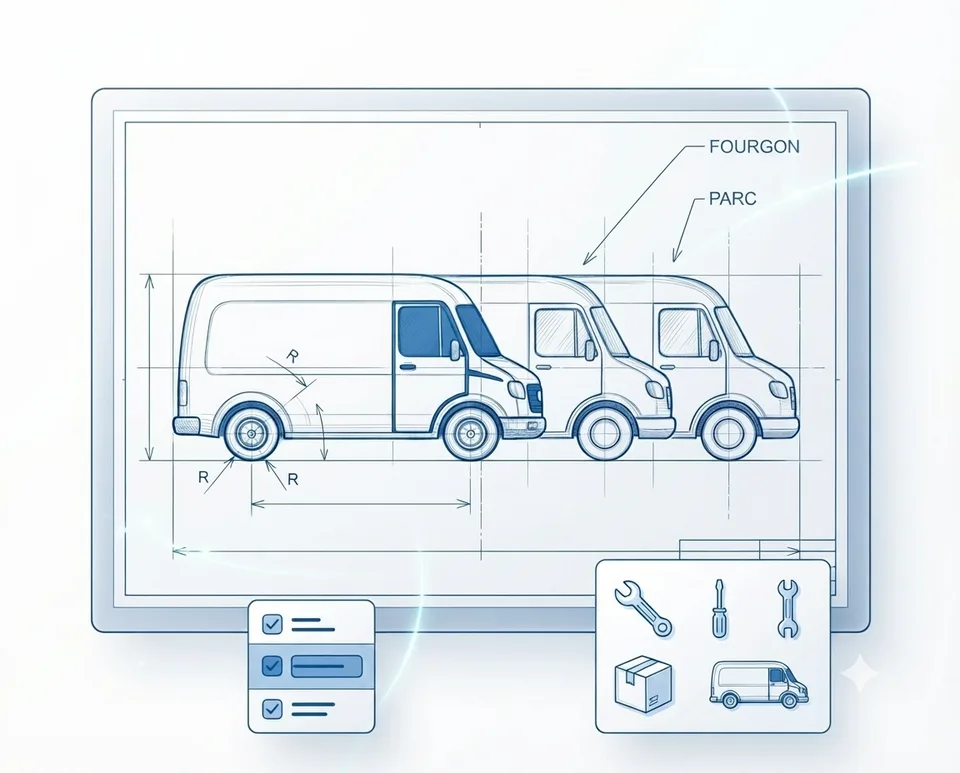
This template applies the four-block method, THE THINGS, THE LINKS, THE STATES, THE NUMBERS, to managing a company vehicle fleet. It's filled in for a services company with twelve vehicles: the example shows how to describe what really matters in a fleet, dates, assignments and costs, without ever describing a screen.
The trade's specificity: a fleet is driven by due dates. Roadworthiness test, maintenance, insurance, contract end, the application is worth first of all its ability to surface what's coming due before it is due. The NUMBERS block is therefore mostly an alerts block.
Filled with your vocabulary, this text briefs a developer, or is submitted as-is to Blueprint Maker, which turns it into an application plan you validate, then a generated application: database, screens, dashboard and demo data.
The template to copy
My business: services company, twelve utility vehicles,
drivers rotate depending on the job site.

THINGS tracked:
- Vehicles (plate, make, model, first registration date,
  mileage, next inspection date, insurance renewal date,
  ownership mode, owned, long-term lease, contract end date)
- Drivers (name, licence, licence expiry date)
- Assignments (vehicle, driver, start date, end date)
- Maintenance jobs (date, vehicle, nature, service, tyres, repair,
  odometer reading, cost)
- Incidents (date, vehicle, driver, description, cost)

LINKS:
- An assignment links a vehicle and a driver over a period.
- A maintenance job concerns a vehicle.
- An incident concerns a vehicle and a driver.

STATES of a vehicle: in service, in maintenance, immobilised, out of fleet.

NUMBERS to see every Monday:
- Inspections due within 60 days
- Maintenance coming due (by date or mileage)
- Who drives what today
- Cost per vehicle over the last 12 months
Adapting this template to your fleet
- Mileage readings: decide their source, monthly reading by the driver, reading at each service, or both. Without current mileage, the mileage-based maintenance alert is worthless.
- Assignments: if each vehicle has a fixed driver, the assignment is stable and simple; if vehicles rotate, the assignment period becomes the key information (who had the vehicle when the ticket arrived).
- Fuel and toll cards: if you track them, add a "Card" entity linked to the vehicle or driver, reconciling statements becomes a possible monthly check.
- Long-term leases: for leased vehicles, contract end date and mileage cap are alerts in their own right, an overrun is negotiated before the deadline, not after.
- Driver licences: the expiry date belongs in the register, a reminder before expiry avoids the uncovered driver.