
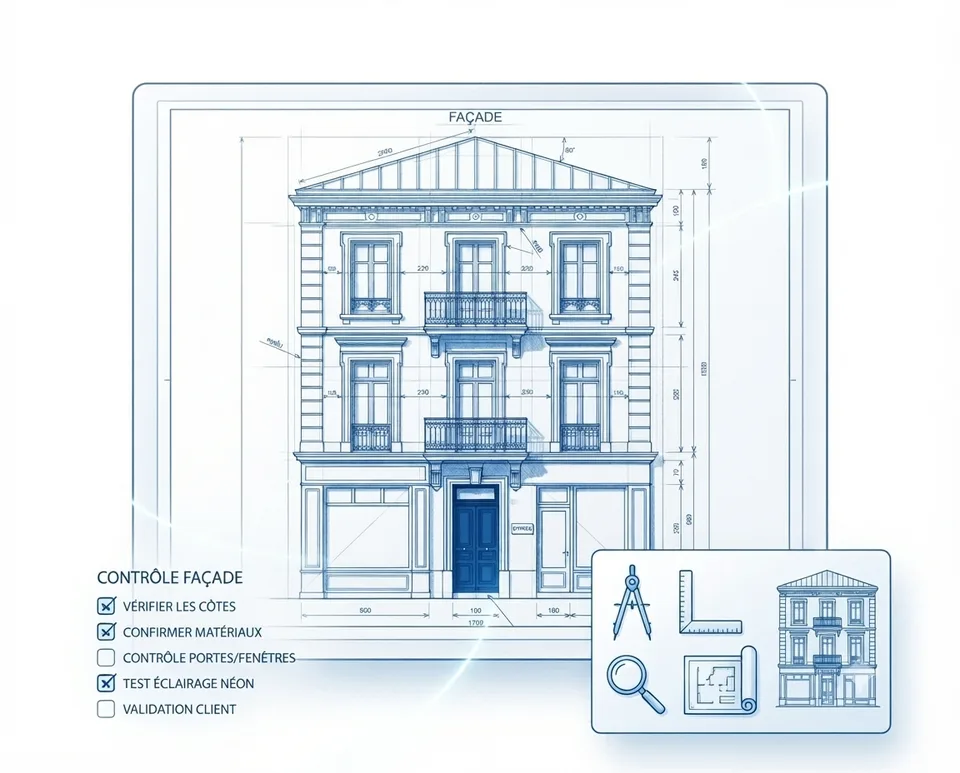
Small building, real responsibility, missing tools
Thousands of small condominiums are managed by a volunteer co-owner. The real daily burden isn't legal: it's administrative: tracking who paid their fund calls, tracing the garage leak incident, finding the roofer's quote, preparing a general meeting with accurate numbers.
Professional condo software is out of proportion (and price); the volunteer's spreadsheet dies at every handover. In between, what's missing is the simple, transferable tool that keeps THE building's register.
Your building, described then generated
Describe your building: “Our condominium has 12 units with ownership shares. We call charges quarterly. I track payments, reported incidents (leak, gate breakdown) and contractor work with quotes and invoices. I want who's up to date, open incidents and the year's expenses.”
The generated application structures that register: units and co-owners, fund calls with share-accurate payment tracking, incidents and their interventions, attached expenses, and the dashboard that prepares the general meeting.
- Units, shares and co-owners
- Fund calls and payment tracking
- Reported incidents with statuses
- Contractor work, quotes and invoices
- Dashboard: arrears, open incidents, expenses
The handover, finally serene
The volunteer manager's recurring drama is the handover: the predecessor's binders and spreadsheet are unreadable, history is lost, the successor restarts from zero. A centralised web application changes that: the new manager receives access, and the whole history: calls, payments, incidents, expenses: is there, structured and browsable.
And because the code exports (ZIP, GitHub), the tool belongs to the condominium itself: it outlives mandates, goodwill and platforms.
A cost at small-condominium scale
The Discovery plan (€0) generates the application: for a small building, often enough. Pro (€25/month) and Max (€149/month) are for iterating more, with the cost shown before each generation.
Compare with a professional manager's fees for a 10-unit building: the tracking tool that makes volunteering sustainable funds itself with a fraction of the first avoided invoice.
Typical generated entities
- Unit
- Co-owner
- Fund call
- Incident
- Contractor job
Generated screens
- Units and co-owners list
- Fund calls and payment tracking
- Open incidents with history
- Contractor work and expenses
- Condominium dashboard
Dashboard indicators
- Co-owners up to date / late
- Open incidents
- This year's expenses
- This quarter's fund calls
Frequently asked questions: volunteer condo management
Does the application compute share-based splits?
Describe your allocation rule and shares structure the units; call and payment tracking builds on them. Complex regulatory accounting remains the job of dedicated accounting tools.
Is this legally certified condo-management software?
No: it's the building's operational TRACKING tool: registers, payments, incidents, expenses. Formal obligations keep their own channels; the application gives you up-to-date numbers to fill them.
Can the co-owners' council consult the tool?
It's a centralised web application: council members can read the same up-to-date register, which simplifies transparency and decisions.
What happens when the volunteer manager changes?
That's the main point: the application and its history stay in place; the successor takes over access. The code is exportable (ZIP, GitHub), the tool belongs to the condominium.
Can we adapt the tool to our building (parking, cellars, special charges)?
Yes: describe your unit types and charge keys, the generated structure reflects them. You validate the plan before generation.